My Garden Tale
- 4.4
- Rating
- 1.00M
- Installs
- Free
- Price

 Analysis by App-foxy
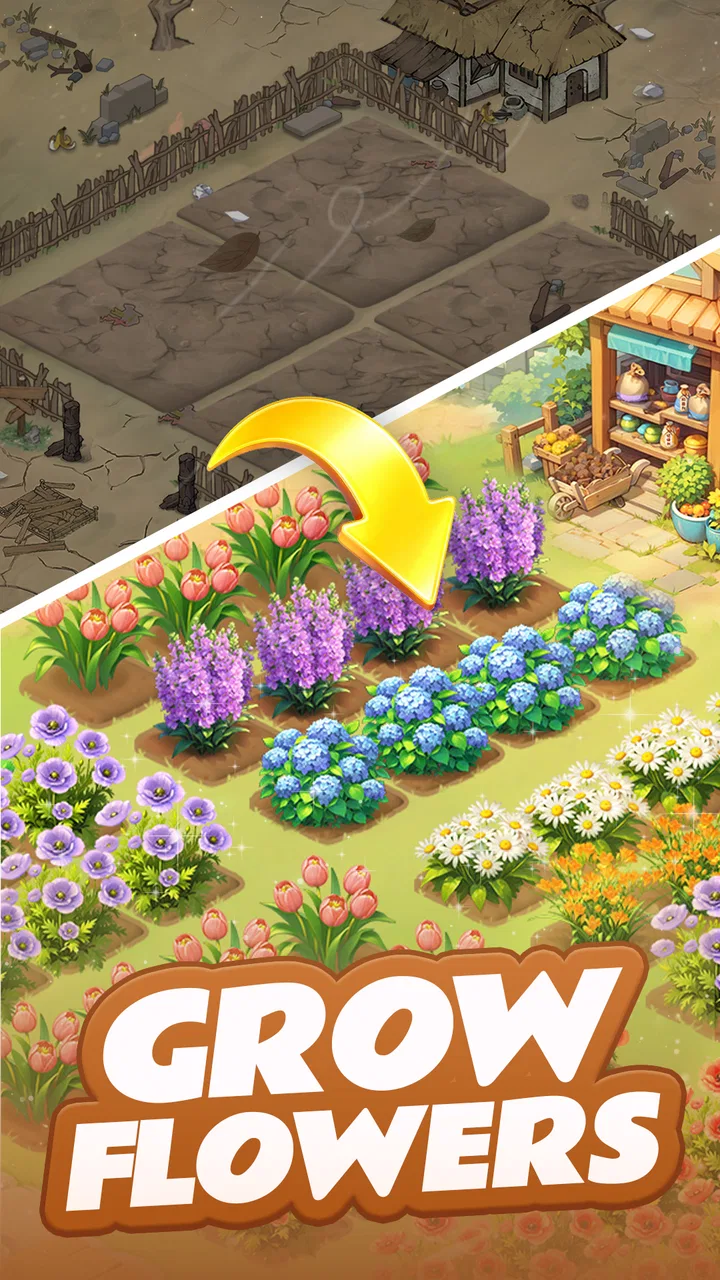
I approached My Garden Tale as a quiet simulation game rather than a typical score-chasing mobile title. Its central idea is simple: leave the noise of city life behind, shape a personal garden, and work toward bouquets that can be won in the game’s reward system. That promise gives it an appealing mood, especially when I want something gentle to play for a few minutes instead of another demanding action game.
Made by Modo Global, this free game sits in the simulation category and is suitable for Everyone. It has reached over one hundred thousand installs and holds a 4.6 average from around two thousand ratings, which suggests that its calm garden theme has found a receptive audience. I would still treat those figures as a starting point rather than a guarantee: the real question is whether its pace, spending model, and garden-focused routine match the way you like to play.
How the garden feels during ordinary play
The strongest part of the experience is its sense of gradual progress. A garden simulation works best when the player can make a small improvement, step away, and return with a clear reason to continue. My Garden Tale is built around that kind of low-pressure rhythm. I found it easier to approach than a game that expects constant concentration, because the theme naturally supports short sessions and relaxed attention.
You May Also Like

 Blood Strike: 2.5 Anniversary
Blood Strike’s Loadouts Turn Every Drop Into a Tactical Gamble
A close look at Blood Strike’s custom loadouts: how fast access to signature weapons reshapes its battle royale rhythm, rewards preparation, and narrows the gap between fights.

 Pandora - Music & Podcasts
Pandora’s Music Is Easy to Start, but Harder to Recover
Pandora’s strength is its low-effort path from a seed to a station. Its weak spot is how much confidence it asks you to place in connection, setup, and quiet recovery.

 8 Ball Pool
 Is Built on Rivalries, Rematches, and Routine
A close look at the rivalries, rematches, shared routines, and unanswered safety questions that turn a quick pool match into a persistent mobile community.

 Samsung Music
’s Quiet Strength Is Playing What You Already Own
Its reach comes less from spectacle than from dependable access to a personal library. That simplicity is both the app’s strongest retention engine and its ceiling.

 AccuWeather: Weather Radar
AccuWeather Review: A Quick, Clear Forecast for Everyday Decisions
For everyday plans, the best forecast is the one you can understand quickly. AccuWeather makes rain timing, radar, and local conditions easy to act on, with a few trade-offs.

 Hill Climb Racing
Why Hill Climb Racing Still Turns Crashes Into One More Run
A tiny car, a bumpy hill and one more upgrade: Hill Climb Racing keeps resurfacing because its simple chaos makes every near-miss feel personal.
More From Our News Desk
View All News


A realistic use case is an evening when I have ten minutes before bed. Instead of starting a competitive match that may run long, I can open the garden, check what needs attention, make a few decisions, and stop when the space feels a little more complete. It also suits short breaks during the day, provided you are comfortable with a game whose appeal comes from steady development rather than dramatic surprises.
The bouquet objective gives the peaceful setting a practical purpose. It is not only about looking at a pleasant garden; there is also a reason to keep engaging with the space. That balance matters. A purely decorative garden can become passive, while a heavily goal-driven simulation can lose its relaxing character. Here, the attraction is the meeting point between a soothing setting and a reward-oriented routine.
I would not choose this game if I wanted deep strategy, fast reactions, or a story with constant twists. Its identity is much narrower and clearer. People who enjoy arranging, improving, and revisiting a virtual space are likely to understand the appeal quickly. Players who need frequent novelty may find the same gentle pace too restrained.
What to expect from the pace
My Garden Tale presents itself as a game for unwinding, so I would set expectations accordingly. The experience is better judged by how comfortably it fits into spare moments than by how much action it delivers per minute. That makes perceived speed highly personal: someone seeking a calm routine may see the pace as pleasant, while someone accustomed to rapid progression may consider it slow.
The most useful way to play is to give each visit a small purpose. I might open the game to work toward a bouquet, tidy up a section, or simply check the next available improvement. That approach prevents the session from feeling aimless. It also reduces the temptation to rush through every available activity just to create the impression of speed.
There is a trade-off here. A slower structure can make progress feel more meaningful, but it can also make waiting or repeated actions more noticeable. If you prefer games where every tap produces an obvious new result, this may not satisfy you for long. If you enjoy watching a project take shape over repeated visits, the same design choice becomes one of its main strengths.
When longer sessions put the experience to the test
Short sessions are the natural fit, but longer play is where I would pay closer attention to comfort. Repeating the same garden-focused loop for a prolonged stretch can make any limitations in variety more apparent. The game’s relaxing concept helps at first, yet relaxation and engagement are not identical: a calm activity still needs enough meaningful choices to hold attention.
I found the better strategy is to avoid treating it like a marathon. Play until you have completed a clear small objective, then leave the garden and return later. This is not merely a personal preference; it is a practical way to preserve the game’s atmosphere. Stretching a soothing simulation into a long uninterrupted session can turn its gentle rhythm into repetition.
Heavy-use moments may also occur when you are trying to make faster progress toward a bouquet or when several garden decisions arrive close together. Those are the points at which the game’s reward structure matters most. I would keep an eye on whether the next step feels like a satisfying choice or simply an invitation to wait or spend. That distinction determines how fair and enjoyable the longer-term routine feels.
The in-app purchase range runs from twenty-nine cents to three hundred ninety-nine dollars ninety-nine per item. That is a very broad range, so I would recommend deciding on a personal spending limit before playing, particularly if the reward loop makes you want to accelerate progress. The game is free to start, but “free” does not mean every possible shortcut or optional purchase will feel equally comfortable for every player.
Stability and returning after interruptions
For a game designed around a peaceful routine, reliability is especially important. A sudden interruption is more frustrating in a garden simulation because the player is often trying to preserve a sense of continuity. I would therefore judge the app not only by what happens during a smooth session, but also by how easy it feels to return after closing it, switching apps, or taking a break.
My practical advice is to make a habit of ending a session after a clearly completed action rather than in the middle of a transition. That gives you a cleaner mental checkpoint and makes returning less confusing. It is also sensible for any progress-based mobile game where you want to know exactly what you were doing when you last stopped.
The game was released on January 26, 2026, so its position in the market is relatively recent. That makes the current impression more important than assumptions based on older garden games. I would keep the app updated through the normal store process and pay attention to how it behaves on your own device, since stability can vary with operating-system versions, available storage, and background activity.
I would not describe a calm theme as proof of perfect reliability. A visually simple or relaxing game can still encounter interruptions, loading delays, or awkward recovery in real-world use. The sensible expectation is that the game should fit into a dependable routine, while the final verdict on stability should come from several sessions on your particular phone or tablet rather than from one quick launch.
Device fit and resource expectations
The minimum supported operating system is Android 7.0, which gives the game a relatively broad potential device range. That does not mean every older device will feel identical. A phone can meet the operating-system requirement and still have limited memory, little free storage, or a busy background workload that affects how comfortably any game runs.
If your device is older, I would close demanding apps before opening the garden and leave reasonable free storage available. These are simple habits, but they are more useful than guessing that a simulation will automatically be light on resources. The game’s calm presentation may suggest modest demands, yet appearance alone is not enough to make a precise claim about battery use, memory, or loading time.
Players on newer devices should have more flexibility for regular sessions, but even then, I would avoid judging performance solely by the first launch. A better test is to open it several times across a normal day, switch away briefly, and see whether returning feels smooth enough for your routine. That matters more than an isolated impression because this is the kind of title many people will revisit repeatedly.
For families, the Everyone rating makes the game easier to consider as a broadly accessible option. I would still explain the purchase system to younger players, because the age suitability of the content and the presence of optional spending are separate questions. A child may be comfortable with the garden theme while still needing clear boundaries around purchases.
Where it beats familiar alternatives
Compared with a fast arcade game, My Garden Tale offers a much softer commitment. You do not need to prepare for a competitive round or maintain constant reflexes. Compared with a traditional management simulator, its garden setting feels more personal and less like operating a spreadsheet. That makes it a better match for players who want the emotional comfort of tending a space without turning every decision into an efficiency exercise.
It also has a different relationship with rewards than a purely decorative relaxation app. The bouquet goal gives the garden a destination, which can help players who need a little structure to stay interested. The trade-off is that reward pressure can undermine the peaceful atmosphere if you begin measuring every action by how quickly it advances you.
Against deeper farming or life-simulation games, this title is likely to appeal to people who want a more focused idea rather than a large collection of systems. That focus can make it approachable, but it may also feel limited to players who expect crafting, exploration, characters, or a wide economy. I would pick My Garden Tale for a compact garden routine, not as a replacement for a full-scale simulation.
Small habits that improve the experience
My first useful tip is to decide whether you are playing for decoration, progress, or bouquets before opening the app. Those goals can coexist, but choosing one as the session’s priority prevents unnecessary tapping and makes the game feel more intentional. If the garden is your relaxing space, do not let the reward target turn every visit into a race.
Second, use short checkpoints. I would finish one clearly recognizable task, look at the garden as a whole, and then decide whether another action genuinely adds value. This keeps longer sessions from becoming a blur of repeated interactions and makes it easier to notice whether the game is still enjoyable rather than merely habitual.
Third, treat purchases as optional acceleration rather than part of the basic routine. Because individual items can range from very small amounts to a much higher maximum, setting a limit in advance is wiser than making decisions while chasing the next reward. If you enjoy earning progress slowly, the free entry point may be enough; if you dislike any pressure to speed up, the purchase structure may be a reason to skip the game.
Finally, test it under your real conditions. Open it during the kind of break when you expect to play, leave it briefly, return to it, and see whether the pace feels comfortable. This reveals more than a long first session because the game’s main promise is how well it fits into everyday downtime.
Who should install it, and who should pass
I would recommend My Garden Tale to someone who likes gentle simulations, visual improvement, and goals that can be approached in small steps. It is particularly suitable for players who want a quiet alternative to competitive mobile games and do not need constant action to feel entertained. The Everyone rating also makes it a reasonable candidate for households looking for a mild garden-themed game, with adult guidance around purchases.
I would be more cautious if you want a rich, expansive simulation with many interconnected systems. Players who prefer fast progression may become impatient with the slower atmosphere, while people who dislike in-app purchase prompts may find the broad item range uncomfortable even though the game is free to download. It is also not the best choice for anyone seeking a serious gardening simulator; its appeal is relaxation and reward, not detailed real-world horticulture.
The rating of 4.6 from around two thousand ratings is encouraging, and the game’s install count shows that it has attracted a meaningful early audience. Still, those signals cannot tell me whether its rhythm will suit you. The most important decision is whether you enjoy returning to the same garden repeatedly and making modest improvements without demanding a major event every time you play.
My performance verdict
My overall view is that My Garden Tale works best as a compact, low-pressure simulation for short, repeat visits. Its perceived speed should feel comfortable to players who value calm progress, while those looking for immediate intensity will probably find it too restrained. The game’s recent release and broad operating-system support make it worth trying on a compatible device, but I would evaluate stability and resource comfort through normal daily use rather than assume they from the theme alone.
The most important limitation is the tension between relaxation and monetized progress. The garden can be a soothing place, yet the wide purchase range means I would play with a clear spending boundary. That does not cancel the appeal of the free starting point, but it does change how carefully I would recommend it to children or to anyone who is easily drawn into accelerating a reward loop.
In the end, I see this as a focused garden game rather than an all-purpose life simulator. If you want a quiet digital space, a modest objective, and a reason to return during spare moments, I think it is worth trying. If you need complex management, fast action, or completely pressure-free progression, a different simulation will serve you better. For the right player, the best feature is not speed or scale; it is the feeling that a few peaceful minutes can leave the garden a little more complete.
FAQs for My Garden Tale
01What is My Garden Tale and how does it work?
My Garden Tale is a gardening simulation app that allows users to design and manage their own virtual garden. Players can plant various flowers, vegetables, and trees, customize garden layouts, and even interact with friendly garden creatures. The app provides a relaxing and educational experience, ideal for both gardening enthusiasts and casual gamers.
02Is My Garden Tale free to download and play?
My Garden Tale is free to download and play on both Android and iOS platforms. However, it offers in-app purchases for additional features, such as exclusive plant species, garden decorations, and expedited growth time. While these purchases enhance the experience, they are entirely optional and the game can be fully enjoyed without spending money.
03Does My Garden Tale require an internet connection?
My Garden Tale can be played offline, allowing users to enjoy gardening anywhere without an internet connection. However, certain features, like social interactions and leaderboard updates, require a connection. Playing online also enables cloud save functionality, ensuring your progress is backed up and accessible across devices.
04What are the age recommendations for My Garden Tale?
My Garden Tale is suitable for all ages. Its content is family-friendly, with no violence or inappropriate material. The app is designed to be intuitive, making it accessible to young children while still engaging enough for adults. Parents can feel confident in allowing their kids to explore and learn through this virtual gardening experience.
05How can I get help or support for My Garden Tale?
If you encounter any issues or have questions while playing My Garden Tale, support is readily available. The app includes a comprehensive FAQ section and user guide. Additionally, players can contact customer support through the app's help section or via the official website, where a team is ready to assist with any inquiries.
Pros
- Beautiful
- intuitive user interface
- Engaging storyline with unique twists
- Wide variety of plants to cultivate
- Regular updates with new content
- Offline mode available for on-the-go play
Cons
- Some items require in-app purchases
- Occasional lag on older devices
- Limited customization options
- Ads can be intrusive at times
- Progression can feel slow without boosts

My Garden Tale
Gallery